
Return to 3rd Quarter 2026 articles.

from Does God Exist? 3rd Quarter 2026
STAY UP-TO-DATE ON NEWS AND NOTES. The stories in News and Notes are condensed from articles previously published on our website DOES GOD EXIST? TODAY. You can use the links within each of these articles to see the original posts (on the Does God Exist? Today website) for more details. (Some of the articles below have links to outside sources, which may not be available after we have published this page.) There are also many other interesting and informative articles on the Does God Exist? Today website each day. We encourage you to follow us daily on “Does God Exist? Today.” On that website you can also subscribe to our free weekly e-mail update. We call it “The Best of the Week from DOES GOD EXIST?” It contains links to the most popular of our posts on DOES GOD EXIST? TODAY and our facebook page (Facebook.com/evidence4god).
OPPORTUNITY TO STUDY WITH JOHN CLAYTON: Because of the COVID pandemic and age, we have suspended our lectureship schedule. In place of that, we are providing an opportunity for congregations to have a lectureship electronically. We want to give the readers of this publication the same opportunity to study with John Clayton.
We will mail you a DVD of the first four lectures in our video series. You or your group can watch the four programs writing down questions and challenges to the material. Please send us your questions via e-mail or postal mail, and John Clayton will respond to them. If you are satisfied with that material, return the DVD, and we mail you the next one. Your only cost is the return postage for the DVD.
If you are interested in this opportunity, please send us your name and address, and we will send you the first DVD. Watching the Does God Exist? presentations in the comfort of your home is an excellent way to receive the information from the Does God Exist? program. E-mail your request to John Clayton at jncdge@aol.com or mail your request to Does God Exist?; PO Box 2704; South Bend, IN 46680.
REFERENCES can be seen when one looks at the links within the articles below. The Internet being in a constant change, some references may be obsolete when you are reading these articles.
THE SOUND OF RAINFALL: Researchers in the U.K. and at MIT have found that seeds sprout faster when exposed to the sound of rainfall on the ground. When raindrops hit the ground, they create vibrations strong enough to jostle microscopic structures called statoliths inside the seeds. That sets off a biological chain reaction that triggers germination. The study shows that seeds can germinate 40% faster when exposed to rainfall sounds.
Researchers have had great success with rice seeds exposed to rainfall sounds, compared with rice seeds not exposed to them. With all other factors identical between the two groups, rice seeds exposed to the sound of rainfall grow 40% faster. The extensive design in nature is a strong apologetic for God's existence.
Reference: The Week, May 15, 2026, p. 21
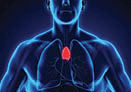
THE THYMUS IS ESSENTIAL: A mysterious organ of the human body lies behind the sternum (breastbone) and in front of the heart. It is called the thymus. Almost 2000 years ago, the Greek physician and surgeon Galen of Pergamon called it the “seat of the soul.” However, as recently as 1961, Nobel Prize-winning British biologist Sir Peter Medawar called the thymus the graveyard for dying cells and “an evolutionary accident of no very great significance.” Today, scientists know that the thymus plays an essential role in establishing the immune system during childhood and remains beneficial throughout life.
Recent research at Massachusetts General Hospital has shown the role the thymus plays in a person's health. It helps regulate aging and immune health. It appears to play a crucial role in a person's longevity, protecting against cancer, autoimmune disease, and even cardiovascular risks. Medical scientists have found that people with healthier thymuses are less likely to develop lung cancer or die of heart disease or other causes.
The thymus has an essential purpose and is not a vestigial organ, as some have thought in the past. It is not a mistake of evolution. A healthy thymus is a predictor of good health in many respects. The research has led to interest in finding ways to slow the thymus's natural deterioration, which occurs in adulthood. The thymus has an essential purpose because God designed it that way, but science overlooked it for way too long.
CREATING A SMELL MAP: It is easy to overlook the importance of the sense of smell. Smell affects human health and safety and plays an essential role in the taste of food. It can also warn us of spoiled or unsafe food by its rancid odor. Smelling can give pleasure, as with the fragrance of flowers, or make us nauseated, as when we smell a foul odor. Fragrances can bring back pleasant memories. The loss of smell can cause depression. With those things in mind, researchers are creating a smell map.
Maps of the receptors for vision, hearing, and touch have been developed previously, but this research was the first to create a detailed map of the receptors for smell. The challenge in creating a smell map is that it is more complex than the other senses.
Before creating a smell map, the prevailing theory held that smell receptors were randomly distributed. The study showed that smell receptors form horizontal stripes from the top of the nose to the bottom, and that the order matches the brain's olfactory bulb.
This research is important because it will help scientists develop therapies for people who have lost their sense of smell. As we learn more about how the sense of smell works, we see evidence of design.
Reference: Harvard Medical School

HONEYBEES CAN COUNT: New research supports the idea that honeybees can count. This is remarkable given that a honeybee's brain has fewer than one million neurons (compared with a human brain's 86 billion) and weighs less than one milligram (human brains weigh 1300 – 1400 grams).
Earlier research indicated that bees could count, add, subtract, and understand the concept of zero, but other scientists were skeptical of that data. The new research, published in the journal Proceedings of the Royal Society B: Biological Sciences, seems to support the earlier findings.
The way honeybees process numerical information is amazing when you consider the size of their brains. Learning the concepts of “greater than” and “less than” can be useful for a bee's survival. Of course, the report credited honeybees' numerical ability to evolution, but could it not be likely that the Creator placed in the tiny brains of these bees the neurological structure they need to survive?
References: popsci.com and Proceedings of the Royal Society B
SECRETS OF THE BEES: The May 2026 issue of National Geographic carried an article titled “Secrets of the Bees.” The first point is the complexity of hives. Bees design their hives to suit the climate where they live. Many have nests below ground, with some bees excavating as deep as three feet. The larvae develop in areas called brood cells, which are stocked with food.
A second point in the National Geographic article is that bumblebees can learn to associate certain colors with rewards. Researchers have found that bees can look at a new landscape and navigate around the changes. In other words, bees are not robots that can be stopped by changing the landscape.
A third area of interest is that bees can figure out the most efficient way to reach a flower in a field, allowing them to maximize nectar gain. In describing “Secrets of the Bees,” the National Geographic writers use words like “hidden genius,” “brightest thinkers,” and “remarkable ways” to explain what bees can do. These are words that describe properties God would have given the bees, not accidents of chance.
Reference: National Geographic magazine, May 2026
WHITES OF THE EYES: Human eyes come in various colors, such as blue, brown, or green, but that refers to the iris. The area surrounding the iris is called the sclera. In humans, the sclera is white, or at least close to white. That makes us different from other animals, since most mammals have dark eyes. The question is, why are the whites of the eyes the way they are?

In 1997, Shiro Kohshima, a Japanese biologist at Kyoto University, proposed that the white sclera helps us communicate because the contrast between the white and the dark pupils makes it easier to tell where someone is looking. Parents can often tell if their child is telling the truth by whether the child is looking at the parent. When someone looks away, it may mean they are hiding something. When someone looks us directly in the eye, it helps us bond with that person. Thus, the white sclera helps us communicate or avoid communication.
In 2007, Michael Tomasello, a psychologist at Duke University, expanded on Kohshima's theory, developing a cooperative eye hypothesis. He said that the whites of the eyes help us determine what someone is focused on because we are sensitive to where a person is looking. Within the first few days, babies look longer at faces that are directed at them. By two to four months, babies learn to follow where others are looking. When a parent looks at an object and names it, this helps the infant connect the name to the object, improving language skills.
Even though some people's eyes are not as white as others' due to age, health, or race, humans show more of the sclera than other animals do. We can be thankful that God has given humans this exceptional gift.
Reference: popsci.com
THE EUPHRATES RIVER: “A river watering the garden [of Eden] flowed from Eden, and from there it divided; it had four headstreams. The name of the first is the Pishon … the name of the second river is the Gihon … the name of the third river is the Tigris … and the fourth river is the Euphrates” (Genesis 2:10-14).
Now, seismic imaging can create 2D and 3D maps of the Fertile Crescent's subsurface using sound waves reflected by rock layers beneath the ground. The technique is similar to using ultrasound to create a detailed image of a baby in the womb. The maps can show the land and the Euphrates River as they were in biblical times.
The Euphrates was the longest river in Southwest Asia, flowing some 1,700 miles. It originated in present-day Turkey and flowed through Mesopotamia before emptying into the Persian Gulf. It flowed by Babylon and the ancient city of Uruk in present-day Iraq. Uruk was the world's first metropolis and the birthplace of written language.
Reference: msn.com
JUMPING SPIDER EYES: Many scientific and technological advances are inspired by the study of animals and plants. Spiders have long inspired innovations, especially in silk and web-making. A new development, however, is based on the design of jumping spider eyes.

Jumping spiders (family Salticidae) leap quickly to avoid predators, capture prey, or simply move around. They need good 3D vision to judge distances when they jump. Unlike human eyes, which have only one retina, jumping spider eyes cannot move, but they have multiple retinal layers. These layers capture the image with slightly different focus. Their poppy seed-sized brains then process the images, comparing differences in sharpness to compute the distance to an object.
A computer scientist at Northwestern University, Emma Alexander, and her colleagues, have created an extremely efficient 3D camera dubbed a “SpiderCam.” The SpiderCam perceives depth the same way that jumping spider eyes do, by capturing images on two layers of “retinas” with very slight differences in focus. A computer algorithm embedded in a custom chip compares the images to calculate depth and distance.
The advantage of the camera based on jumping spider eyes is that it uses less energy and less expensive hardware than other 3D cameras. Humans continue to learn from animals, and as we discover God's designs in nature, we can apply them in biomimicry to solve problems in technology and everyday life.
Reference: popsci.com/
SELF-DRIVING CAR SAFETY: Human eyes have a remarkable ability to adjust quickly to changes in light intensity. This is especially important when driving at night. When bright headlights from an oncoming vehicle shine into our eyes, we must be able to continue to see the road and any possible pedestrian or deer crossing in front of us. This requires our eyes to adjust very quickly. God has designed human eyes with an amazing ability to adjust quickly to changes in light. Inspired by the human eye's design, researchers at Pennsylvania State University (Penn State) have engineered a “photomemristor” to improve the safety of self-driving cars.
Typical photocells cannot handle the wide range of light intensities required in some driving situations, especially at night. The Penn State researchers have designed a device that can “dynamically adapt to changing light conditions.”
Many times, we have seen innovations that involve biomimicry, imitating the design God has used in the natural world. Improving the safety of self-driving cars or robots that perform various duties requires learning from God's design of vision.
References: nature.com and popsci.com
MAGNETIC BIRD MIGRATION: Scientists have known for decades that birds use Earth's magnetic field to guide their migrations, but how they detect it has remained a mystery. A recent German study published in the journal Science offers insight into this magnetic mystery of bird navigation.
Birds, as well as other animals, have immune cells called macrophages in their livers. Among other duties, these macrophages eliminate old red blood cells. As they digest these no-longer-needed red blood cells, they accumulate iron nanoparticles, making the macrophages superparamagnetic. In other words, they can detect Earth's magnetic field as the bird passes through it.
Using electron microscopy, the researchers observed that the macrophages were in contact with nerve cells, which could transmit magnetic information directly to the bird's brain.
Solving the magnetic mystery of bird navigation can explain how birds that migrate at night find their way when the sky is overcast. It may also explain how sharks navigate and how bats migrate in the dark. Birds and other migrators use vision, magnetism, and other methods to find their way. God has designed into living things the features they need to survive.
Reference: popsci.com/
Answers to the 3rd Quarter 2026 CROSSWORD puzzle: ACROSS: 2-faith; 4-messengers; 5-evidence; 9-think; 10-design: DOWN: 1-Bible; 3-beginning; 6-easy; 7-cause; 8-dot
Picture credit:
© Nerthuz/Bigstock.com
© olly2/Bigstock.com
© Daniel Prudek/Bigstock.com
© Valua Vitaly/Bigstock.com
© Parkpoom/Bigstock.com
© khunaspix/Bigstock.com
Scripture links/references are from BibleGateway.com. Unhighlighted scriptures can be looked up at their website.